A Surge of Party Hopping Before Kerala’s Local Body Elections
With local self-government elections just weeks away (on December 9 and 11), Kerala is witnessing an unexpected surge in political turncoats. The return of “Aaya Ram Gaya Ram” politics once infamous in Indian legislative assemblies has emerged as a major wildcard in the state.
A Legacy of Defection Meets Modern-Day Local Politics
The phrase “Aaya Ram Gaya Ram” refers to politicians switching parties for personal gain or opportunity. In Kerala, that old phenomenon is being revived but this time, it’s happening at the grassroots level and just ahead of two-phase civic elections.
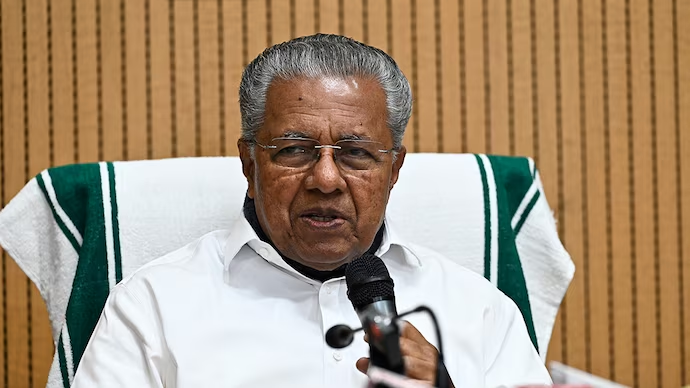
These local body polls are not just administrative exercises: they’re being framed as a referendum on Chief Minister Pinarayi Vijayan’s leadership and a barometer of public mood before the state assembly elections.
Key Political Defections Rock the State
Here are some of the most significant party-switching stories shaking up Kerala politics:
- P. Sujatha, a former Panchayat president from Pathanamthitta and longtime Congress leader, defected to the BJP and landed a ticket for the Kumbanad East ward signaling BJP’s aggressive push into rural Kerala.
- In Kozhikode, IUML’s U. Poker, a well-known trade unionist, joined the CPI(M), praising the development direction under the Left government.
- Sreenadevi Kunjamma left the CPI to join Congress, reportedly due to internal rifts around local leadership and a controversial state legislator.
- N.V. Baburaj, a Congress district leader, crossed over to the CPI(M), accusing his old party of favoring “yes men.” Two more councillors also made the shift.
- Pramila Sasidharan, BJP’s Palakkad Municipal Corporation chairperson, is also embroiled in internal revolt within her own party ahead of the polls.
What Do Analysts and Activists Think?
- Dr. Sebastian Paul, former Left MP and senior lawyer, argues that these defections reflect a breakdown in party discipline. “Leaders are switching sides to suit their political careers,” he told India Today.
- A. Suresh, a political activist in Pathanamthitta, described the scenario as the “death of political loyalty.” He noted that even parties with histories of encouraging such defections are now watching their own cadres jump ship.
Why This Matters for the Civic Elections
- Public Mood Checkpoint: These defections could influence how people vote more than administrative concerns, voters may see the local election as a judgment on political integrity.
- Shifting Coalitions: Turncoats may alter local power equations. BJP is eyeing gains; CPI(M) wants to maintain dominance; UDF must guard against further losses.
- Risk vs Opportunity: Parties taking in defectors risk appearing opportunistic but if they win, they could strengthen their grassroots base significantly.
What’s Next: Watch and Wait
- Election Results Influence: The outcome of the December polls could validate or punish these defections.
- Assembly Poll Prelude: With the state assembly elections expected next, local gains or losses could ripple into higher-stakes contests.
- Further Realignments: More leaders may switch allegiance as they pick political sides ahead of the bigger fight.
Final Thoughts
Kerala’s civic election season has turned into a stage for political musical chairs. The resurgence of “Aaya Ram Gaya Ram” defections is not just about ambition it speaks to deep shifts in party loyalty, strategy, and grassroots strength. As voters prepare to cast their ballots, these defections could reshape local councils and set the tone for the next state election.