Rupee slides further in forex markets
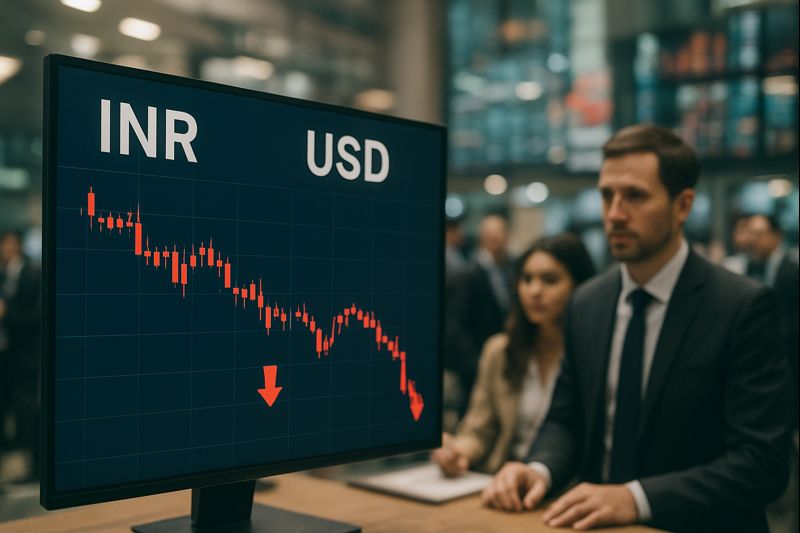
The Indian rupee continued its downturn on Friday, plunging to a fresh lifetime low of ₹90.52 against the US dollar in early trade. This latest slide reflects ongoing economic pressures, global uncertainties, and stalled policy developments, all of which have left investors and households closely watching currency markets.
What’s behind the rupee slide a quick overview
Currency fluctuations are nothing new, but the rupee’s recent performances have raised eyebrows. The Indian rupee one of Asia’s most closely watched emerging market currencies has been gradually weakening over the past several months due to a mix of domestic and global factors. Falling below the psychologically important ₹90 mark marks a watershed moment for the currency.
Latest Market Update: Key Details on the Record Drop
Here’s what the latest data and analysts are pointing to:
- New all-time low: The rupee slipped to ₹90.52 per US dollar in early trade, surpassing previous lows seen earlier in December.
- Investor sentiment subdued: Ongoing uncertainty around the status of a long-anticipated India-US trade deal has weighed heavily on market confidence.
- Foreign portfolio outflows: Persistent foreign fund exits from Indian equities and debt markets have contributed to increased dollar demand and downward pressure on the rupee.
- Import demand keeps dollar strong: Strong import demand especially for commodities like crude oil has further widened the demand gap for dollars versus rupees.
Analysts note that this decline is largely sentiment-driven rather than structural, though it reflects sustained caution in risk-sensitive markets.
What Experts Are Saying About the Currency Weakness
Market professionals highlight several contributing factors behind the rupee’s slide. One key point is the stalled progress in trade negotiations with the United States, which typically influence capital flows and trade balances. The delay has heightened uncertainty, making investors more cautious about holding rupee assets.
In addition, traders say that aggressive dollar purchases by importers especially in the face of rising global commodity prices have amplified downward pressure on the rupee.
Some economists also point out that global monetary conditions including the relative strength of the US dollar and changes in portfolio flows can affect emerging market currencies like the rupee. These external forces often outweigh short-term local macroeconomic performance in times of market volatility.
Why the Rupee’s Plunge Matters to India
The rupee’s weakness affects various sectors and segments of the economy in tangible ways:
- Higher import costs: Most everyday imports, including crude oil and electronics, become more expensive when priced in a weaker rupee, potentially fueling inflation.
- Impact on inflation: Imported inflation can ripple through production and consumer prices, putting pressure on household budgets and corporate input costs.
- Exports may get a boost: A weaker currency can make Indian exports more competitive, giving firms an edge in global markets although this benefit can be offset by trade barriers and tariff uncertainties.
- Investor confidence: Continued currency weakness can dampen investor sentiment and influence foreign investment decisions over the medium term.
For the average Indian, a weaker rupee can eventually be felt in rising prices for imported goods, higher travel and education costs abroad, and increased pressure on inflation-sensitive sectors.
Outlook & Possible Scenarios
The future trajectory of the rupee will likely depend on a combination of global and domestic developments:
- India-US trade negotiations: Progress in trade talks could ease uncertainty and potentially stabilize the rupee.
- Foreign investment flows: A reversal in portfolio outflows or renewed foreign inflows could provide support for the rupee.
- Global economic indicators: Changes in US Federal Reserve policies, oil price trends, and global risk sentiment will also influence currency movements.
Analysts will be closely watching RBI policy responses though for now, the central bank appears to be allowing some depreciation as part of market-driven adjustment.
Conclusion: Navigating Currency Uncertainty
The Indian rupee’s slide to ₹90.52 against the US dollar underscores ongoing economic challenges and market uncertainties, particularly relating to trade dynamics and global capital flows. While a weaker rupee can support exports, it also raises import costs and inflation pressures. For businesses, investors, and households alike, the key lies in understanding these currency movements within the broader macroeconomic and geopolitical context. Continued monitoring and strategic policy decisions will be crucial in managing volatility and fostering stability in the months ahead.