Rupee weakens further as forex volatility intensifies
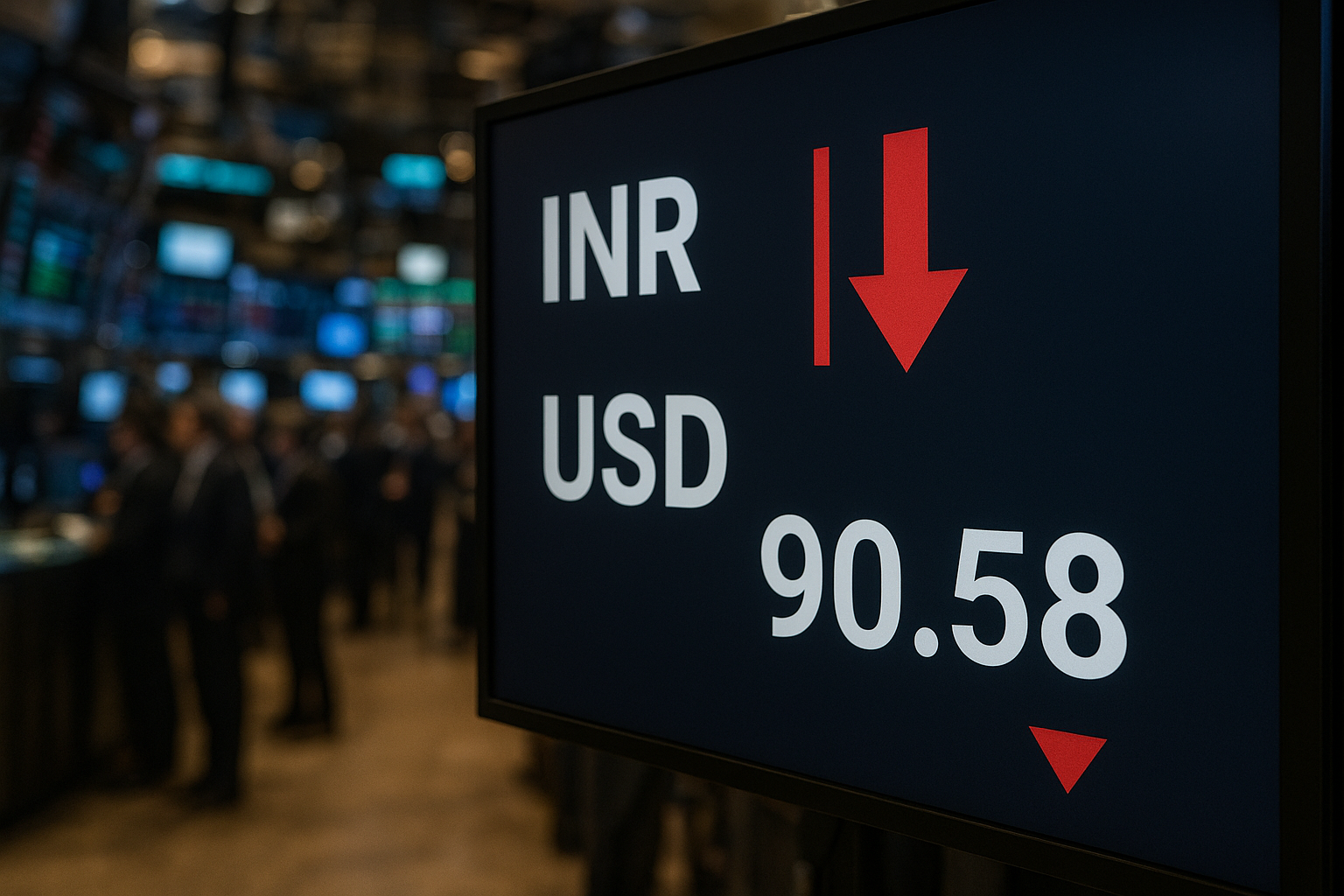
The Indian rupee continued its downward journey on Monday, hitting a fresh all-time low of ₹90.58 against the US dollar in early trade. This latest slump reflects persistent pressure on India’s currency markets amid global economic uncertainty, foreign investor outflows and trade dynamics.
How we got here
The rupee’s decline below the psychological ₹90 mark has unfolded over recent weeks. Earlier this month, the currency breached the ₹90 threshold for the first time, and it has slipped further since due to a combination of external and internal market forces. India’s weak currency performance stands out this year, making the rupee one of the worst-performing Asian currencies in 2025.
What’s driving the rupee’s fresh record low
Several key factors are contributing to the rupee’s ongoing slide:
- Persistent foreign capital outflows: Continued selling by foreign institutional investors (FIIs) has increased demand for the US dollar, exerting downward pressure on the rupee.
- Trade deal uncertainty: Delays and lack of clarity around a potential India-US trade agreement have dampened investor confidence in Indian assets.
- High demand for dollars: Increased dollar purchases by importers especially for commodities such as crude oil have widened the gap between supply and demand for foreign currency.
- Strong dollar sentiment: Despite a weaker global dollar index at times, safe-haven demand for the greenback remains elevated, particularly in volatile markets.
These forces have combined to weaken the rupee trajectory, with analysts predicting continued testing of new lows if underlying trends persist.
Analysts explain the currency pressure
Market experts say the rupee’s decline is being shaped as much by global sentiment as by domestic fundamentals. Economists point out that foreign investor outflows, widened trade deficits and slower export growth are major stressors. Such conditions reduce capital inflows and elevate demand for the dollar a standard safe-haven currency during market turbulence.
A senior strategist notes that without a decisive India-US trade agreement to ease tensions, market confidence will remain shaky, limiting any sustained rebound in the rupee’s value.
Why This Slide Matters for India’s Economy
The rupee’s depreciation has several important implications:
- Import costs rise: India relies heavily on imported commodities like crude oil. A weaker rupee means higher bills for importers, which can feed into inflation and raise costs for consumers.
- Inflationary pressures: Higher import costs often ripple through the economy, pushing up fuel prices, transportation costs and consumer goods.
- Impact on households: Ordinary citizens may feel the effects through rising costs for foreign travel, education expenses abroad, and even imported electronics.
- Export competitiveness: On the positive side, a weaker rupee can make Indian exports relatively cheaper in global markets potentially supporting export-oriented sectors.
This balance between benefits for exporters and challenges for importers shapes much of the debate around currency weakness.
Outlook for the Rupee and Markets
Looking ahead, several developments may influence the rupee’s direction:
- Trade negotiations: Progress on international trade deals especially with the United States could restore investor confidence and stabilize currency flows.
- Foreign investment trends: Any uptick in foreign portfolio investment (FPI) inflows could ease downward pressure on the rupee.
- Global central bank policies: Decisions from the US Federal Reserve and other major central banks will continue to affect global currency markets and capital flows.
Analysts will also watch Reserve Bank of India (RBI) moves closely. While the RBI has occasionally intervened in forex markets, the timing and scale of any future interventions could shape near-term outcomes.
A Challenging Phase for the Rupee
The Indian rupee’s slide to ₹90.58 against the US dollar underscores ongoing vulnerabilities in currency markets driven by global economic pressures, investor behavior, and trade uncertainty. While a weaker rupee offers mixed effects across sectors, its trajectory is a key barometer of wider financial sentiment. Policymakers, investors and households alike will be watching closely as India navigates this dynamic economic environment.