
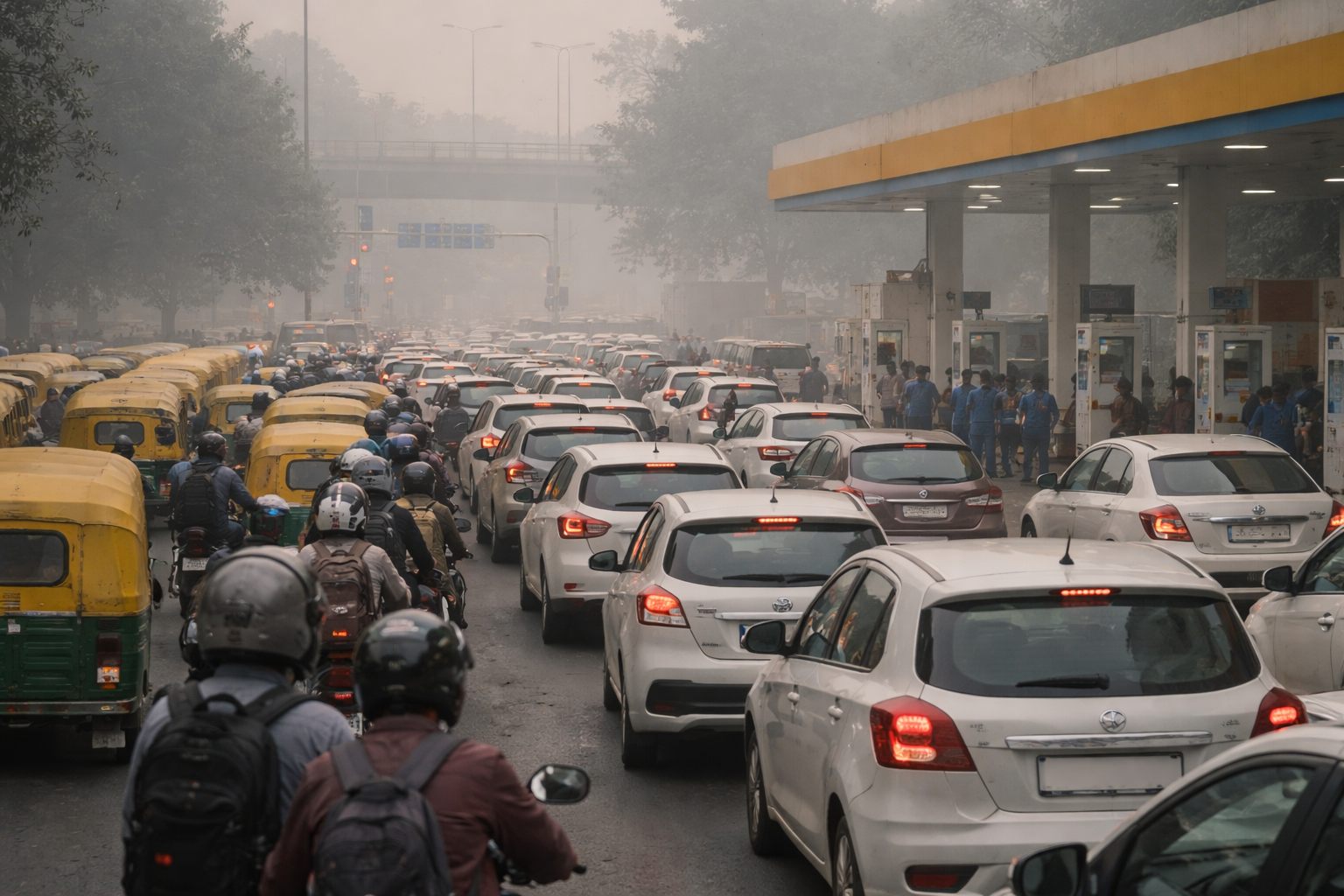
Capital tightens checks as air pollution worsens ahead of peak winter
Delhi has rolled out a fresh set of pollution-control measures aimed squarely at vehicles, as deteriorating air quality once again puts public health at risk. The new rules restrict fuel access for older vehicles and make valid pollution certificates mandatory across the city.
Why vehicle pollution remains a major concern
Delhi has long struggled with severe air pollution, especially during winter months when weather conditions trap pollutants close to the ground. Vehicular emissions consistently rank among the top contributors, alongside construction dust, industrial activity, and stubble burning in neighbouring states.
Over the years, authorities have introduced measures such as odd-even schemes, BS-VI fuel, and age limits on vehicles. However, enforcement gaps and rising vehicle numbers have limited their long-term impact.
What the new pollution rules say
Under the latest regulations now in force, Delhi has significantly tightened vehicle-related checks to curb emissions at the source.
Key provisions include:
- No fuel for old vehicles: Diesel vehicles older than 10 years and petrol vehicles older than 15 years will not be allowed to refuel
- PUC mandatory at fuel stations: Vehicles without a valid Pollution Under Control (PUC) certificate will be denied fuel
- Real-time enforcement: Fuel stations are using digital systems and cameras to identify non-compliant vehicles
- Zero tolerance approach: Repeated violations could attract fines and further legal action
The move marks one of the strictest enforcement drives Delhi has seen in recent years.
Why enforcement matters more than announcements
Environmental experts say the policy itself isn’t new, but its strict on-ground enforcement could finally make a difference. Air quality specialists have repeatedly pointed out that old vehicles emit disproportionately higher pollutants compared to newer models.
According to public health researchers, even a small reduction in vehicular emissions during peak pollution periods can significantly lower respiratory distress cases, especially among children and the elderly.
Health, compliance, and public responsibility
Delhi’s air pollution is not just an environmental issue it is a public health emergency. Poor air quality has been linked to asthma, heart disease, reduced lung capacity, and premature deaths.
These rules matter because they:
- Push vehicle owners to retire highly polluting vehicles
- Encourage regular emission testing and compliance
- Reduce pollution exposure at busy traffic intersections
- Signal stricter accountability rather than advisory measures
While the rules may inconvenience some motorists, officials argue that public health must take priority.
More checks and tighter winter controls likely
Authorities are expected to scale up enforcement as winter progresses. Additional steps could include restrictions on construction activity, intensified checks on commercial vehicles, and tighter monitoring of industrial emissions.
Experts also stress the need for better public transport, faster EV adoption, and improved last-mile connectivity to ensure long-term pollution reduction beyond seasonal measures.
A tough step, but a necessary one
Delhi’s latest pollution rules send a clear message compliance is no longer optional. By cutting off fuel access to the most polluting vehicles, the city is attempting to tackle one of its biggest air quality challenges head-on.
Whether the move delivers lasting relief will depend on consistent enforcement and public cooperation in the weeks ahead.