
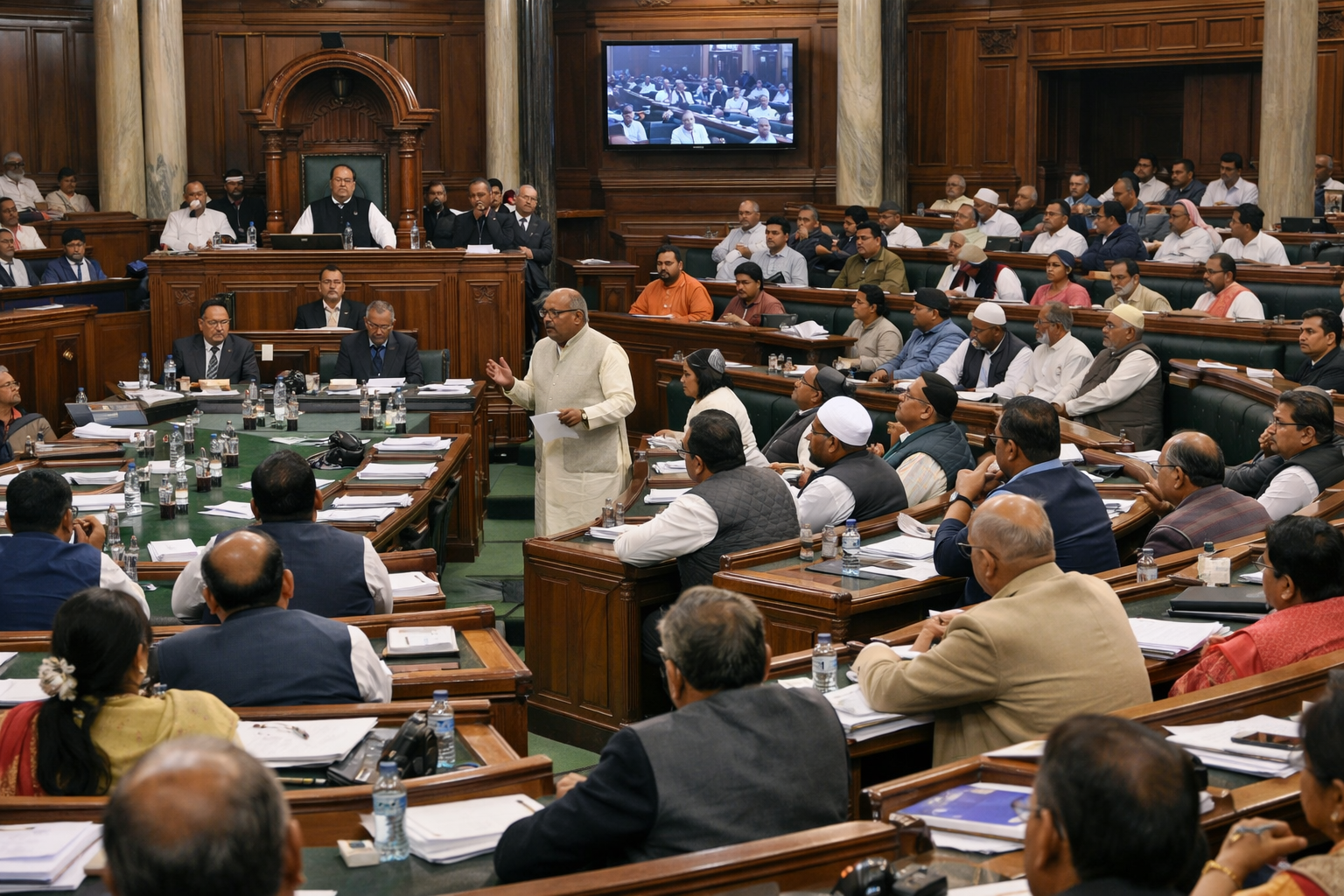
New legislation aims to modernise rural job guarantees amid fierce political debate
In a dramatic Winter Session of Parliament, Indian lawmakers passed the Viksit Bharat-Guarantee for Rozgar and Ajeevika Mission (Gramin) Bill, 2025 (VB-G RAM G) a new rural employment law designed to replace the Mahatma Gandhi National Rural Employment Guarantee Act (MGNREGA). The landmark decision generated intense debate in both houses, with opposition parties protesting the changes.
MGNREGA’s legacy and the push for reform
Since its enactment in 2005, MGNREGA has been India’s flagship rural job guarantee scheme, ensuring at least 100 days of unskilled work per year to rural households willing to do manual labour. Advocates credit the program with providing vital income support and empowering rural communities.
However, critics have long pointed to implementation challenges, funding constraints, and shortfalls in actual employment delivered compared with statutory guarantees. In response, the government introduced VB-G RAM G as part of its broader Viksit Bharat @2047 vision to revamp rural welfare frameworks.
What the VB-G RAM G Bill proposes
The Parliament passed the new VB-G RAM G Bill in both the Lok Sabha and Rajya Sabha after spirited debates and protests from opposition leaders. Key provisions of the bill include:
- Repeal of MGNREGA and replacement with VB-G RAM G as the statutory rural job guarantee framework.
- Increase in guaranteed wage employment days from 100 to 125 days per household annually.
- Revised funding pattern with a Centre-State cost-sharing arrangement, replacing the previous centrally-dominated funding model.
- Focus on aligning employment with infrastructure creation, natural resource management and livelihood initiatives in rural regions.
The bill’s passage in Rajya Sabha came after midnight, with lawmakers continuing discussions well into late hours. Opposition members staged walkouts and vocal protests in both houses of Parliament, objecting to the repeal of MGNREGA without broader consensus.
Debate over rights-based versus allocation-based guarantees
Policy analysts caution that while expanding employment days is a notable change, the replacement of MGNREGA’s rights-based guarantee with the new framework could dilute the legal security previously available to rural workers. Multiple opposition MPs argued that the bill shifts from an entitlement model to one with more discretion and budgetary allocation controls, potentially weakening the assured nature of wage work.
Critics also highlighted concerns over federal fiscal responsibilities, noting that the new cost-sharing norms could strain state budgets and impact delivery at the grassroots level. Rural labour advocates have called for broader stakeholder discussions before final implementation.
Implications for rural employment and livelihoods
The transition from MGNREGA to VB-G RAM G marks a significant policy shift in India’s approach to rural employment guarantees. For millions of rural households that rely on wage work for income stability, the law’s effective execution will be critical. The promise of up to 125 days of work annually has the potential to strengthen livelihood security, especially in regions with seasonal distress.
At the same time, the debate underscores broader tensions in Indian politics over social welfare policy, rights-based entitlements, and the role of central versus state governance in programme delivery.
Implementation and political response
With Parliament’s approval completed, the VB-G RAM G Bill will now be sent for presidential assent before becoming law. Once enacted, the Ministry of Rural Development will begin the process of operationalising the new framework, including notifying implementing schemes and engaging state governments in rollout plans.
Political analysts predict continued pushback from opposition parties and civil society groups, some of whom are planning nationwide protests and advocacy campaigns to press for amendments or greater safeguards around employment guarantees.
A pivotal moment in rural employment policy
The passage of the VB-G RAM G Bill represents a pivotal restructuring of India’s rural job guarantee system. With the promise of increased workdays and a renewed focus on livelihood security, the new law aims to modernise rural welfare in line with long-term national goals. However, the political controversy surrounding its enactment highlights the importance of inclusive dialogue and careful implementation as India navigates this major policy transformation.