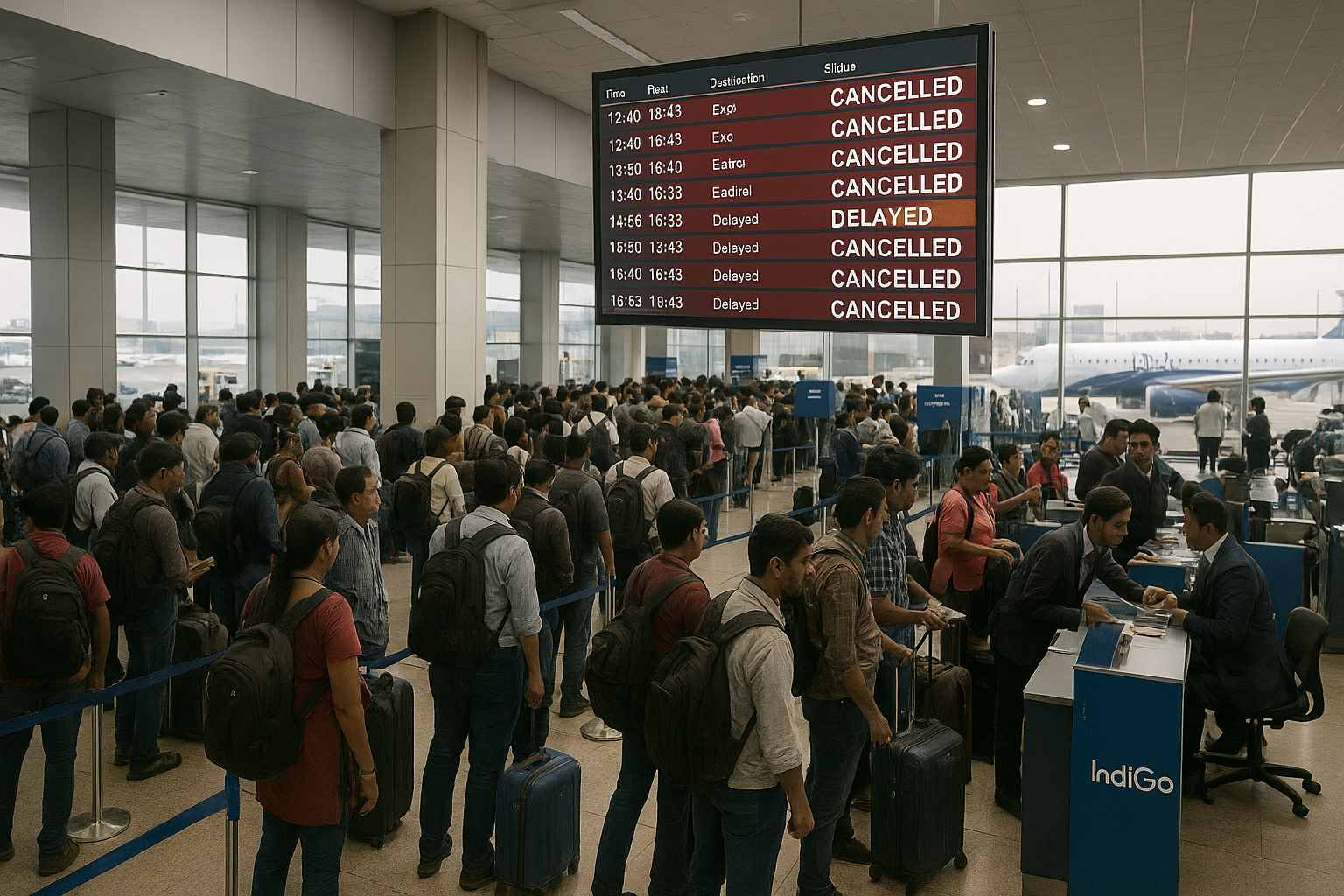
In early December 2025, IndiGo cancelled hundreds of flights across India, triggering widespread disruption for travellers. Major hubs including Delhi, Mumbai, Bengaluru, Hyderabad and Chennai were hit as the airline scrambled to comply with new crew-duty regulations and manage a severe pilot shortage.
Why This Crisis Began: Crew Rules and Under-Preparedness
The root cause lies with newly enforced regulations under DGCA’s Flight Duty Time Limitations (FDTL), implemented from 1 November 2025. Under the revised norms, pilots’ flying hours and night-landing limits were tightened, and weekly rest requirements increased changes meant to improve safety and reduce fatigue. However, IndiGo underestimated how many crew members would be needed to meet the standards, and failed to recruit or prepare enough pilots in advance. The result: a critical mismatch between crew availability and operational demand.
What Happened: Cancellations, Delays and Chaos
Massive Disruption Across Network
- On 5 December 2025, IndiGo cancelled all domestic flights from Delhi Airport until midnight, affecting more than 235 scheduled departures.
- On that day alone, over 750 flights nationwide were cancelled, with additional delays reported at Mumbai, Bengaluru, Hyderabad, Chennai and other airports.
- Airports such as Pune saw at least 16 flights (arrivals + departures) cancelled, while many others were delayed. The disruption was worsened by aircraft being stranded on ground parked but without crew blocking parking bays and contributing to a domino effect of delays.
Official Response: Admission & Regulatory Review
IndiGo has publicly acknowledged its “misjudgment” in crew planning and accepted that the shortage under the new FDTL rules is the primary reason behind the cancellations. The airline has asked the DGCA for temporary relaxations and has committed to scaling down operations starting 8 December to better manage crew availability. Meanwhile, the DGCA has opened a review into the disruptions and pressed IndiGo for a detailed plan to stabilise operations.
Passenger and Industry Fallout
The cancellation spree has caused chaos for thousands of travellers long waits at airports, missed flights, uncertain travel plans, potential financial losses, and frustration over lack of clarity. Many passengers reportedly struggled to get refunds or rebook alternate flights.
For the aviation industry, the crisis underlines how quickly safety-driven regulatory changes can disrupt operations if not supported by robust manpower planning. It also raises questions about readiness and crisis-management protocols in India’s busiest airline.
What Happens Next: Timeline & What Travellers Should Know
- IndiGo has forecast that full operational stability may return by 10 February 2026, subject to crew recruitment and rostering improvements.
- Meanwhile, the airline warns that cancellations and delays may continue for a few more days (through around 8 December) as they reorganise schedules under new FDTL norms.
- Travellers are advised to constantly check flight status before travelling, consider alternate flights or refunds proactively, and prepare for possible disruptions.
Why This Matters
This disruption at IndiGo the largest domestic carrier in India affects not only thousands of travellers, but also impacts airport operations, connecting flights, and overall confidence in airline reliability. It serves as a stark reminder: ensuring safety via strict duty-time rules is vital but so is adequate crew planning. The balance between compliance and service delivery must be handled carefully.
In Summary
IndiGo’s recent flight cancellations and delays are a fallout of tighter DGCA rules, underestimation of crew needs, and winter-schedule pressures. The scale of disruption has been massive, stretching across major Indian cities. While the airline and regulator work to restore normalcy by early 2026, travellers should remain cautious and plan carefully.