
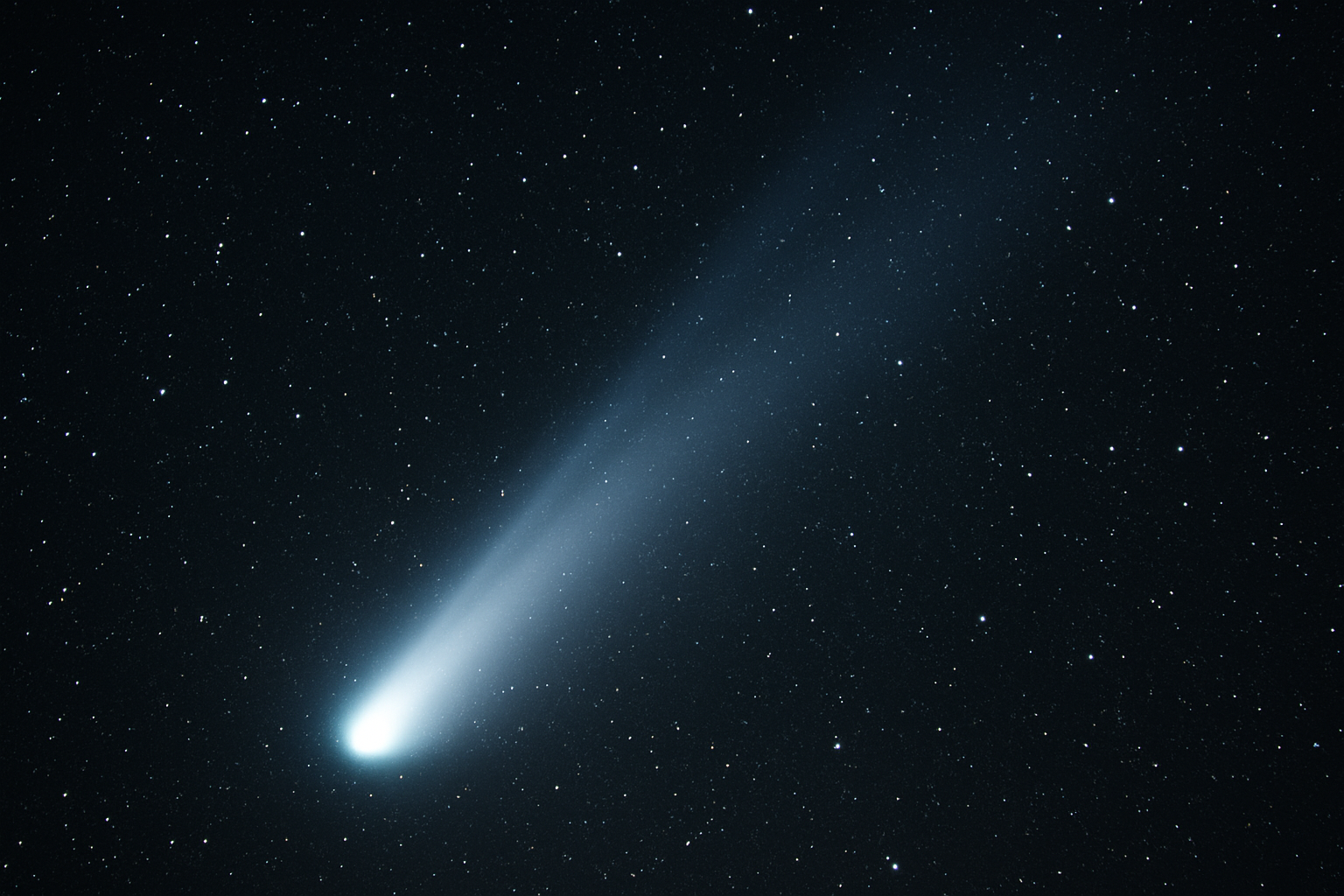
A Glimpse at the Interstellar Visitor
NASA is set to share fresh images of the interstellar comet 3I/ATLAS, a rare object coming from outside our solar system, during a live event on November 19. The release will showcase data from NASA telescopes and spacecraft, giving the public and scientists a close-up look at this extraordinary comet.
Why 3I/ATLAS Is a Big Deal
Comet 3I/ATLAS is only the third confirmed interstellar object ever detected in our solar system. Unlike typical comets, its hyperbolic trajectory indicates that it’s not gravitationally bound to the Sun meaning it came from another star system. NASA’s Hubble Space Telescope snapped images of the comet in July 2025, revealing a dust-filled cocoon around its icy nucleus.
What We Can Expect from the Image Release
Here’s what NASA is likely to unveil:
- Detailed visual data from the Hubble Space Telescope, showing the comet’s nucleus and surrounding dust cloud.
- High-resolution views that highlight the ion tail, formed by charged particles interacting with solar wind.
- A public livestream event from NASA’s Goddard Space Flight Center, offering the public a front-row view of 3I/ATLAS.
What Scientists Are Saying
According to NASA’s media advisory, sharing these images is part of concerted efforts to study the comet’s composition, trajectory, and behavior.
Astronomers note that 3I/ATLAS’s ion tail streaking away from the Sun provides answers about gas and dust released from its nucleus.
Researchers also point out that observations from ground-based telescopes and space missions are crucial to paint a more complete picture of this interstellar visitor.
Why This Cosmic Event Matters
- Scientific Treasure: Interstellar objects like 3I/ATLAS are rare, giving scientists a unique window into materials formed in other star systems.
- Universal Origins: Studying its composition (dust, ice, gases) could reveal clues about how other planetary systems form.
- Public Engagement: The livestream image release gives everyone not just scientists a chance to witness a once-in-a-lifetime space event.
- Future Missions: If 3I/ATLAS exhibits unusual behavior, it could drive new mission concepts to intercept or study interstellar objects.
What Happens After the Image Release
- NASA may run follow-up observations using telescopes like Webb, Swift, or future missions to track 3I/ATLAS.
- Scientists will likely analyze the images to refine models of the comet’s size, speed, and structure.
- Amateur astronomers could follow up: with new data, they’ll be better equipped to observe the comet with backyard telescopes.
- Publications and press outlets may release more detailed scientific interpretations after the public reveal.
Final Thoughts
The upcoming NASA image release for 3I/ATLAS promises to be a landmark moment in space exploration. This interstellar comet isn’t just a passing visitor it’s a messenger from another star system, carrying secrets of a distant past. As NASA brings these images to light, all of us get to peek into the broader story of our cosmic neighborhood and beyond.