Promoter action boosts investor sentiment amid share volatility
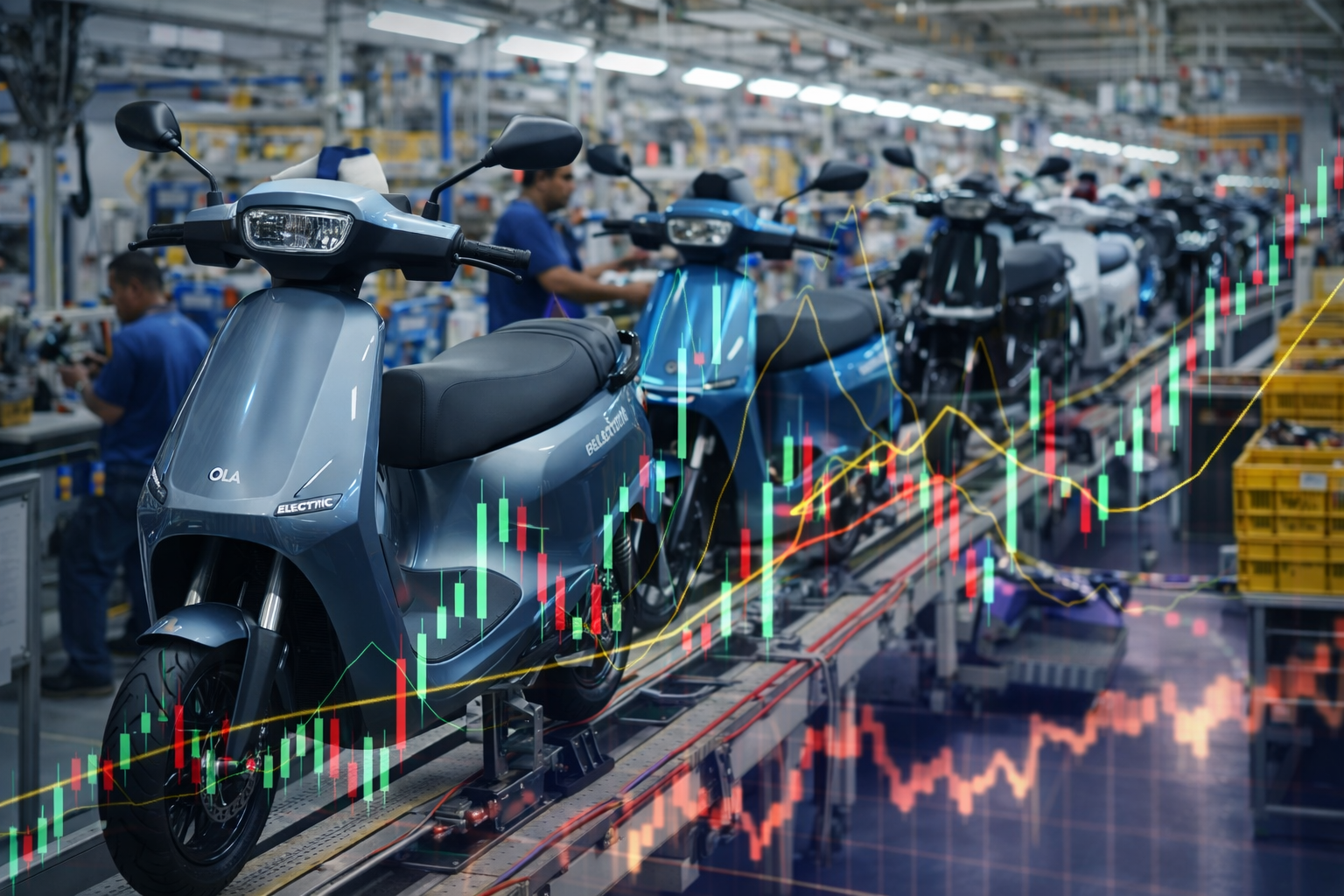
Shares of Ola Electric surged nearly 10 % in early trade after founder-CEO Bhavish Aggarwal completed a stake sale to fully repay a ₹260 crore promoter-level loan, easing a major overhang linked to pledged shares. This financial move has sparked renewed interest among investors and offered a short-term boost to the company’s stock.
Ola Electric’s share struggles and promoter pledges
Ola Electric one of India’s leading electric two-wheeler manufacturers has faced a challenging year in the markets, with its share price slumping substantially from earlier highs. At the same time, promoter share pledges where company insiders pledge their stock as collateral for personal loans had weighed on investor confidence. Analysts often view high pledge levels as risky because a sharp drop in share price can trigger forced sales or margin calls.
To address this concern, Bhavish Aggarwal chose to monetise a portion of his personal holdings to repay the loan and unwind all pledges, a decision that has significant implications for corporate governance and market perception.
Stake sale details and market reaction
Here’s a clear snapshot of the recent developments:
- Loan repaid and pledges released: Aggarwal sold shares to clear his ₹260 crore personal loan, releasing all 3.93 % of previously pledged Ola Electric shares.
- Shares sold over multiple sessions: Over three consecutive trading days, he offloaded about 9.6 crore shares, raising roughly ₹324 crore.
- Promoter holding remains strong: Post-sale, the promoter group still holds about 34–34.6 % of the company, signalling no dilution of control or change in long-term commitment.
- Stock surge: Ola Electric’s shares jumped nearly 10 % on the news of the loan repayment and pledge release, reflecting improved investor sentiment.
Despite the rally, markets continue to be volatile, with earlier heavy selling pushing shares to record lows in recent days.
What analysts are saying
Market watchers view this financial housekeeping move as strategic risk management rather than a shift in operational direction. Analysts have previously pointed out that pledged shares can create significant pressure during stock downturns, as lenders may enforce margin calls that result in forced selling. By repaying the loan and eliminating the pledge overhang, Aggarwal has tackled one such risk head-on.
A senior equity strategist noted that “while the fundamentals of Ola Electric remain under pressure, removing the pledged shares overhang reduces a key short-term risk and reassures investors about promoter conviction.”
Beyond the stock price bump
This development matters on several fronts:
- Investor confidence: Reducing pledged shares and debt liability can help stabilise market sentiment for a beleaguered stock.
- Corporate governance: The move signals a priority on cleaner balance sheets and stronger governance practices, which can attract long-term institutional interest.
- Promoter commitment: Maintaining a sizeable promoter holding even after the sale underscores continued faith in the company’s future prospects.
However, Ola Electric still faces broader challenges, including prolonged share price underperformance and pressures on operational metrics, which investors will be watching closely.
Market watch and future outlook
Looking ahead, analysts will monitor how markets respond in the coming sessions and whether this pledge removal sets the stage for more stability. Key indicators investors will focus on include quarterly earnings, production and delivery figures, and broader EV sector trends in India.
If the stock sustains its gains, it may attract renewed buying interest from retail and institutional investors alike. Conversely, continued volatility could dampen confidence despite the positive financial housekeeping.
A calculated promoter move with broader impact
Bhavish Aggarwal’s decision to sell a portion of his stake to repay debt and release pledged shares has had an immediate positive impact on Ola Electric’s stock performance. While the longer-term trajectory of the company will be shaped by operational results and market dynamics, this financial move addresses a key risk factor and could set a foundation for future investor reassurance.